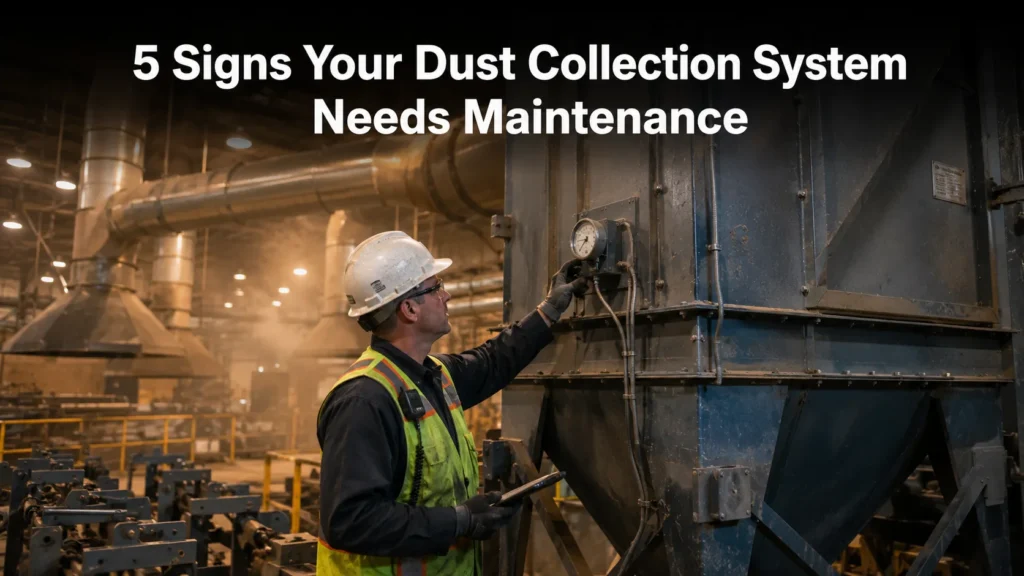
Most dust collector failures don’t happen suddenly. They build slowly a filter that’s slightly dirtier than last month, a suction point that’s a little weaker than it used to be, a pulse-cleaning cycle that fires a bit more often than it should. None of that looks urgent on any single day. But left unchecked, those small changes are exactly how a well-designed system ends up costing you in emissions, energy, filter replacements, and in dust environments classified as combustible genuine fire and explosion risk.
This guide walks through the five clearest warning signs that your dust collection system needs attention, what’s actually happening inside the unit when you see each one, and how to build a maintenance routine that catches problems before they become downtime.
Quick Answer
The five clearest signs your dust collection system needs maintenance are: (1) rising or erratic differential pressure readings, (2) visible dust leaking from seams, doors, or the exhaust stack, (3) weak suction at pickup points despite the fan running normally, (4) higher energy draw or an overheating, louder motor, and (5) pulse-cleaning cycles firing more frequently or filters needing replacement sooner than their expected service life. Any one of these justifies an inspection; more than one at the same time usually means maintenance is already overdue.
Why This Matters More Than It Looks Like It Does
A dust collector isn’t just a housekeeping appliance in most industrial settings, it’s an air pollution control device and, where the collected material is combustible, a piece of fire protection equipment. As of January 1, 2026, NFPA 660, Standard for Combustible Dusts and Particulate Solids, became the unified U.S. standard governing combustible dust hazards, consolidating what used to be separate standards like NFPA 654 and NFPA 61. It requires facilities handling combustible dust to maintain a current dust hazard analysis and keep engineered protections including the dust collector itself in proper working order. A collector that’s been neglected long enough to develop the symptoms below isn’t just running less efficiently; it may no longer be performing the safety function it was engineered for.
That’s the context worth keeping in mind as you read through these five signs they’re not just performance issues, they’re the earliest, cheapest point to catch a problem before it becomes an OSHA citation, a failed emissions test, or worse.
Sign 1: Rising or Erratic Differential Pressure Readings
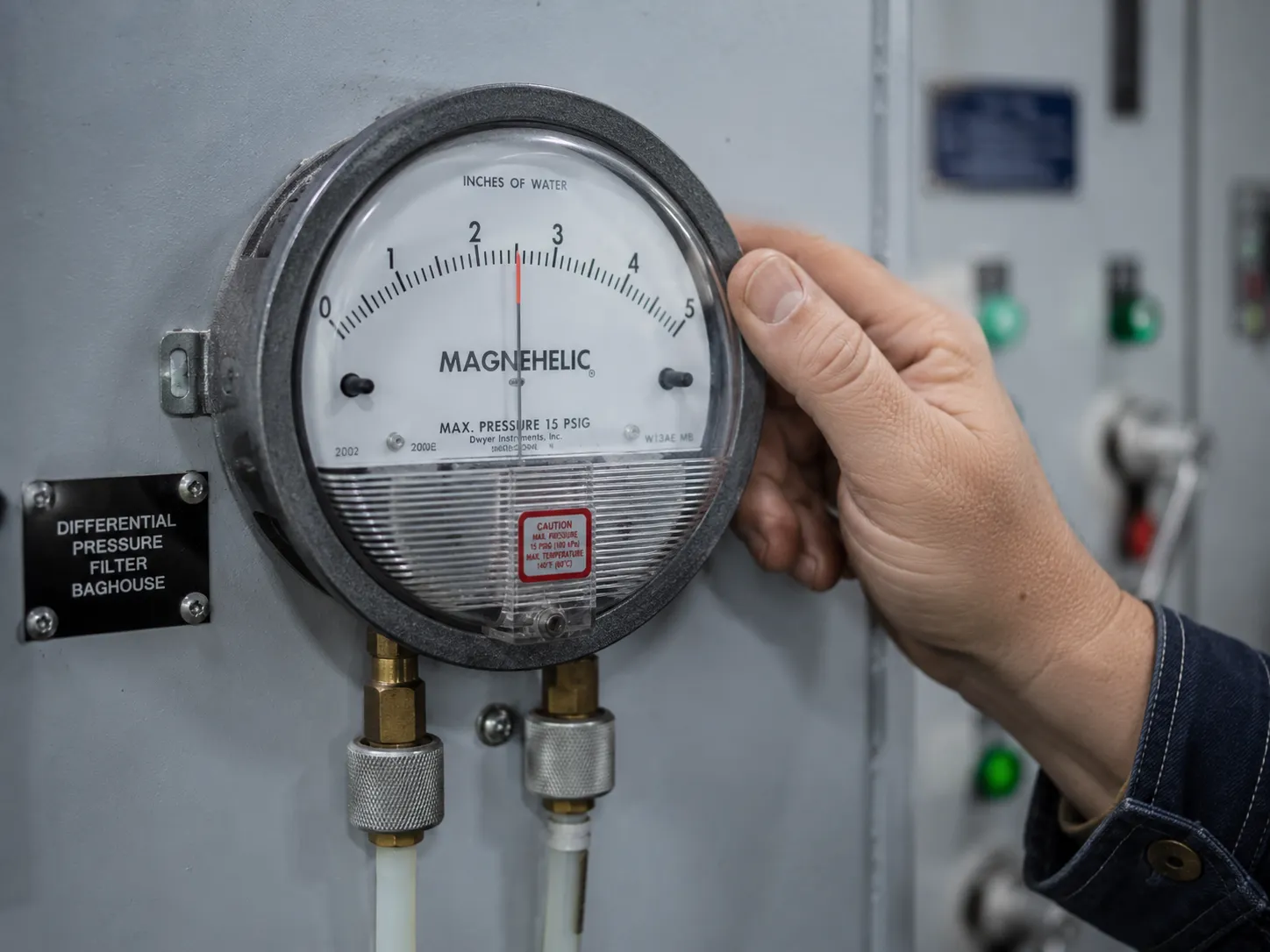
Differential pressure (DP) the pressure difference between the clean-air and dirty-air sides of your collector, usually read on a magnehelic or digital gauge is the single most reliable diagnostic on any baghouse or cartridge collector. A sudden shift in the reading usually means something in the system changed abruptly (a damper position, a plugged section), while a gradual climb over days or weeks tells you filters or ductwork are progressively loading up.
- Steadily climbing DP almost always means filter media is loading with dust faster than the pulse-cleaning cycle can remove it, or that filters have reached the end of their service life and are “blinded” so fully saturated with dust that cleaning cycles can no longer restore them, and replacement is the only fix.
- Abnormally low or zero DP is just as concerning as high DP, and is often misread as “good news.” It frequently signals a crack or hole in the housing or tube sheet, a damper stuck open, or in a surprising number of service calls pressure tap lines that have simply been swapped or disconnected, giving a false healthy reading while the collector is actually under-filtering.
Every gauge reading should be logged, not just glanced at. A single number tells you almost nothing; a trend line tells you exactly when to schedule filter service before you’re forced into an emergency shutdown. If you’re not currently logging DP on a schedule, our dust collector filters and replacement parts page includes gauge and controller options that make this easier to automate.
Sign 2: Visible Dust Escaping From Seams, Doors, or the Stack
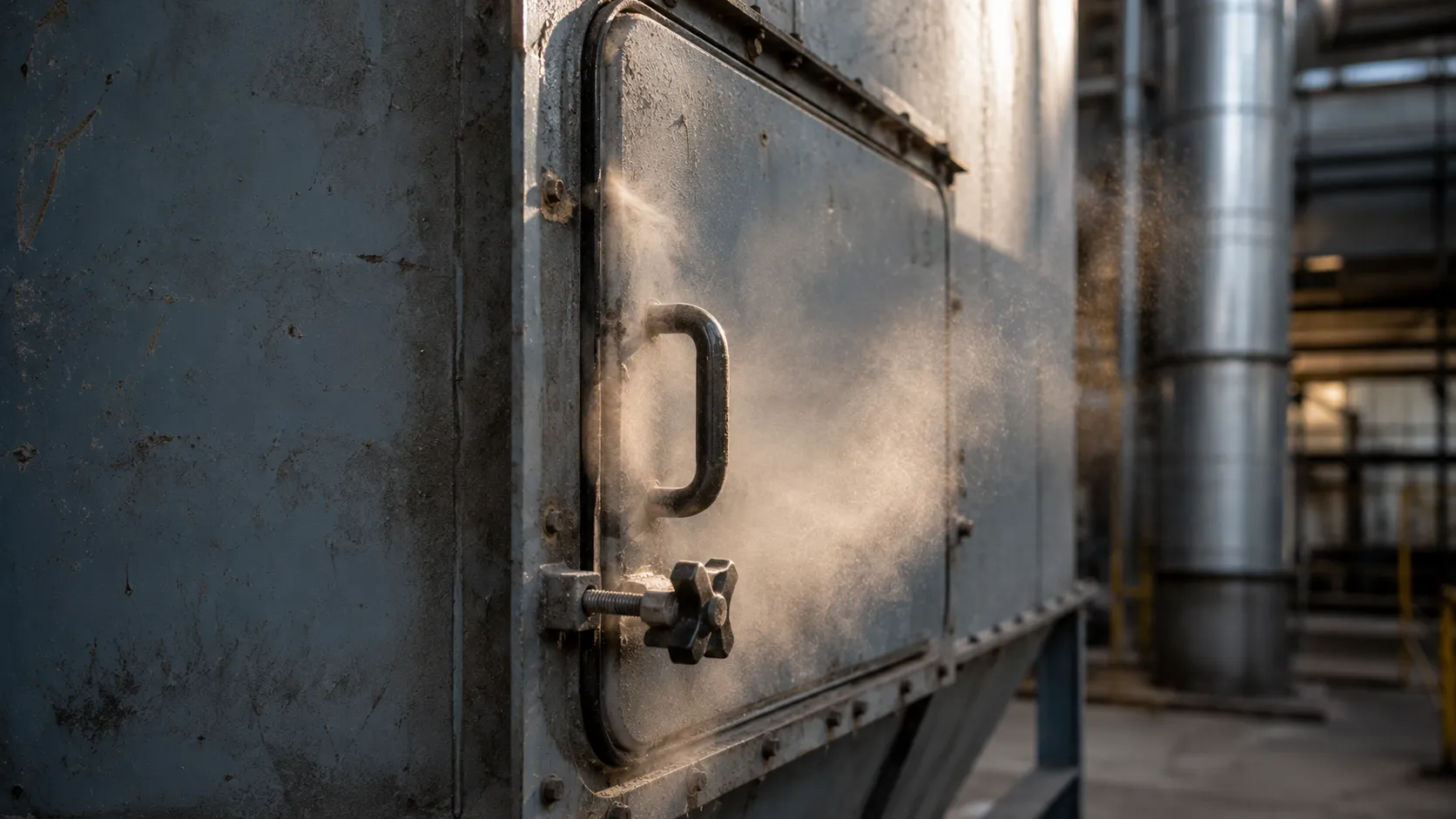
If you can see dust in the air near the collector housing, access doors, ductwork joints, or coming out of the clean-air exhaust stack, filtration has already failed this isn’t an early warning sign, it’s an active one. Common causes include:
- Torn, cracked, or improperly seated filter bags or cartridges
- Gasket failure at access doors or the tube sheet
- Ductwork seams that have loosened from vibration over time
- A cracked housing or tube sheet, which as noted above also shows up as an unexplained drop in differential pressure
Visible emissions are a compliance issue as much as a maintenance one. Beyond the immediate housekeeping and air-quality impact, persistent leakage in a combustible dust environment increases the risk of secondary dust explosions from accumulated surface dust one of the specific hazards NFPA 660 requires facilities to actively manage. If you’re seeing this sign, treat it as a same-week fix, not a next-quarter one.
Sign 3: Weak Suction at Pickup Points, Even Though the Fan Is Running
This is the sign operators notice first but often misdiagnose. Dust that used to get pulled cleanly into a hood or pickup point is now settling on the floor or workbench, even though the blower sounds normal and is drawing power. The usual culprits, roughly in order of likelihood:
- Loading filters : as filters accumulate dust cake, airflow through the system drops even if the fan is working exactly as designed. This ties directly back to the DP readings in Sign 1.
- Ductwork leaks or blockages : a leak upstream of a pickup point steals airflow from where you actually need it; a partial blockage (settled material in horizontal runs is common) restricts flow entirely.
- Damper or blast gate misconfiguration : especially in multi-branch systems, a gate left open on an unused branch will starve the branches that are actually in use.
- A blower that’s genuinely undersized or underperforming for the system’s actual static pressure. If your ductwork or process has changed since the original installation added branches, longer runs, more pickup points the original blower sizing may simply no longer match the system’s real static pressure requirement. Our guide on how to choose the right industrial blower for your application walks through how CFM and static pressure are calculated if you suspect this is the issue.
Weak suction rarely has one single cause it’s worth checking gauge readings, damper positions, and physical ductwork before assuming the blower itself is at fault.
Sign 4: Higher Energy Draw, or a Motor Running Hotter or Louder Than Usual
A blower motor working harder to move the same amount of air or the same amount of effort moving less air shows up on your energy bill before it shows up as a failure. Watch for:
- Rising amp draw on the motor at the same process load, which typically means the fan is fighting increased system resistance (again, often filter loading or ductwork restriction).
- New or louder noise, which can indicate bearing wear, an out-of-balance impeller (often from material buildup on the wheel), or belt wear on belt-drive units.
- Elevated motor temperature, which accelerates insulation breakdown and is one of the more common precursors to an unplanned motor failure.
None of these are dust-collector-specific failures they’re standard rotating-equipment warning signs but because a dust collector runs continuously in most facilities, the cost of ignoring them compounds faster than it does on equipment that only runs occasionally. If bearing wear or motor condition is the concern, our maintenance and service plans include scheduled vibration and amperage checks that catch this before a failure takes the line down.
Sign 5: More Frequent Pulse-Cleaning Cycles, or Filters Wearing Out Faster Than Expected
Pulse-jet cleaning is designed to knock accumulated dust cake off filter media on a set interval, or on-demand based on DP. If you notice the compressor running the cleaning cycle noticeably more often than it used to or filters needing replacement well ahead of their rated service life it’s usually one of these:
- Compressed air quality problems. Wet or oily compressed air degrades filter media and clogs pulse valves, and is one of the most overlooked causes of premature filter failure. Before assuming you need new filters, it’s worth confirming your compressed air is dry and oil-free.
- Undersized filter area for current dust loading, especially if production volume or dust generation has increased since the system was installed.
- Abrasive or unusually fine dust wearing filter media faster than the media was rated for a material change on the process side that the original filter specification didn’t anticipate.
- Pulse valve or diaphragm wear, which causes cleaning cycles to under-perform, forcing the controller to fire more often to achieve the same result.
This is one of the clearest examples of a symptom that looks like “just order more filters” but is actually a sign of an upstream problem that will keep consuming filters and budget until it’s addressed directly.
What Happens If You Ignore These Signs
Beyond the obvious reduced capture efficiency and worse air quality on the shop floor neglected dust collection systems create three compounding costs:
- Energy waste. A collector fighting high resistance from loaded filters or restricted ductwork consumes significantly more energy to move the same volume of air, and that cost accrues every hour the system runs, not just at failure.
- Accelerated equipment wear. Motors, bearings, and pulse valves working outside their designed operating range fail sooner, turning a scheduled filter change into an unplanned motor or blower replacement.
- Safety and compliance exposure. In any facility handling combustible dust, a collector that isn’t performing as designed whether through filter leakage, accumulated dust on interior surfaces, or degraded explosion protection components represents a direct gap against NFPA 660 requirements, not just a maintenance inconvenience.
A Practical Maintenance Schedule
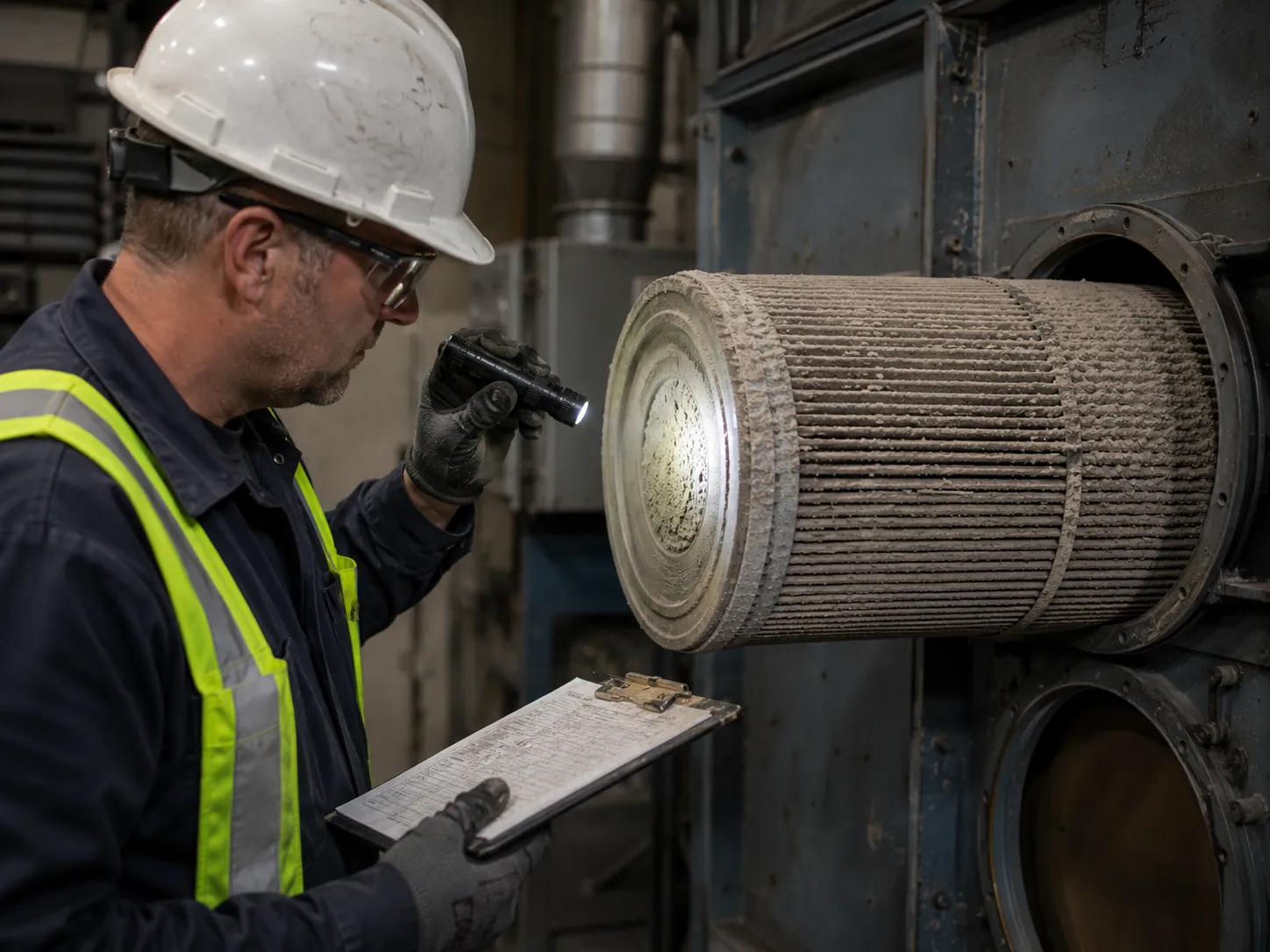
| Frequency | Task |
|---|---|
| Daily | Log differential pressure reading; visually check for dust leakage at doors and seams |
| Weekly | Inspect hopper/discard levels; listen for unusual motor or fan noise |
| Monthly | Check compressed air quality (moisture, oil) for pulse-jet systems; inspect blast gates/dampers |
| Quarterly | Inspect ductwork for leaks, wear, and settled material; check belt tension on belt-drive units |
| Annually | Full filter condition assessment; motor amperage and vibration check; review DP trend logs against baseline |
| As needed / per DHA | Combustible dust housekeeping and explosion-protection component inspection per your facility’s NFPA 660 dust hazard analysis |
Common Mistakes We See in the Field
- Treating a single DP reading as meaningful, rather than tracking the trend over time a snapshot tells you far less than a log.
- Assuming zero or unusually low DP means the filters are clean, when it’s frequently a sign of a disconnected gauge line or a cracked housing.
- Replacing filters without addressing the root cause compressed air quality, abrasive dust, or increased loading which just repeats the same premature failure with the next set of filters.
- Ignoring weak suction because “the fan sounds fine,” when the real problem is upstream filter loading or ductwork restriction, not the blower itself.
- Skipping DP and inspection logs in combustible dust environments, which leaves no documentation trail if your NFPA 660 dust hazard analysis is ever audited.
DIY Checks vs. When to Call a Professional
Daily and weekly checks gauge readings, visual inspection for leaks, listening for unusual noise are reasonable for in-house staff with basic training. Anything involving filter replacement in a combustible dust environment, ductwork modification, motor or bearing service, or explosion-protection component inspection should go to a qualified technician, both for safety and because incorrect reassembly (a gasket seated wrong, a pressure tap reconnected incorrectly) can quietly reintroduce the exact problem you were trying to fix.
Frequently Asked Questions
How often should a dust collection system be serviced?
Daily gauge checks and visual inspections should be routine, with a full filter and mechanical inspection performed at least annually more often in high-dust-loading or combustible dust environments where NFPA 660 requires documented, regular maintenance.
What does high differential pressure mean on a dust collector?
High or steadily rising differential pressure typically means filter media is loading with dust faster than the cleaning cycle can remove it, and consistently high readings usually indicate filters are blinded and need replacement.
Why is my dust collector losing suction even though the fan is running?
Weak suction with a normally running fan is usually caused by filter loading, ductwork leaks or blockages, or misconfigured dampers restricting airflow to the pickup points that need it not necessarily a failing blower.
Is a dusty or leaking dust collector a fire hazard?
Yes, in facilities handling combustible dust, leaking filtration and accumulated surface dust are specifically addressed under NFPA 660 because they increase the risk of ignition and secondary dust explosions.
Can I just replace filters more often instead of diagnosing the real problem?
You can, but it’s usually more expensive over time premature filter wear is commonly caused by compressed air quality, abrasive dust, or increased system loading, and replacing filters without fixing the root cause just repeats the failure.
Related Reading
- How to Choose the Right Industrial Blower for Your Application
- Baghouse vs. Cartridge Dust Collectors: Which Is Right for Your Facility?
- Understanding NFPA 660 Compliance for Your Dust Collection System
- Reading a Magnehelic Gauge: A Quick Reference for Operators
Final Thought
None of these five signs are dramatic on their own that’s exactly why they’re missed. A slightly higher DP reading, a bit less suction at one pickup point, filters that needed replacing a little sooner than last time. But together, they’re the earliest and cheapest point to catch a problem, well before it becomes unplanned downtime, an emissions issue, or a compliance gap in a combustible dust facility.
Schedule a dust collection system inspection → Send us your DP readings, system age, and what you’re seeing on the shop floor, and our team will help you figure out whether you need a filter change, a ductwork inspection, or something else entirely before it becomes an emergency call.