Airvent Systems manufactures wet scrubber systems that capture particulate matter and gaseous pollutants before stack discharge.
Our wet scrubber systems use water or chemical scrubbing media to capture particulates and neutralize gaseous pollutants before they reach the stack. A reliable choice for processes generating sticky, hot or corrosive emissions where dry filtration is impractical.
Request A Quote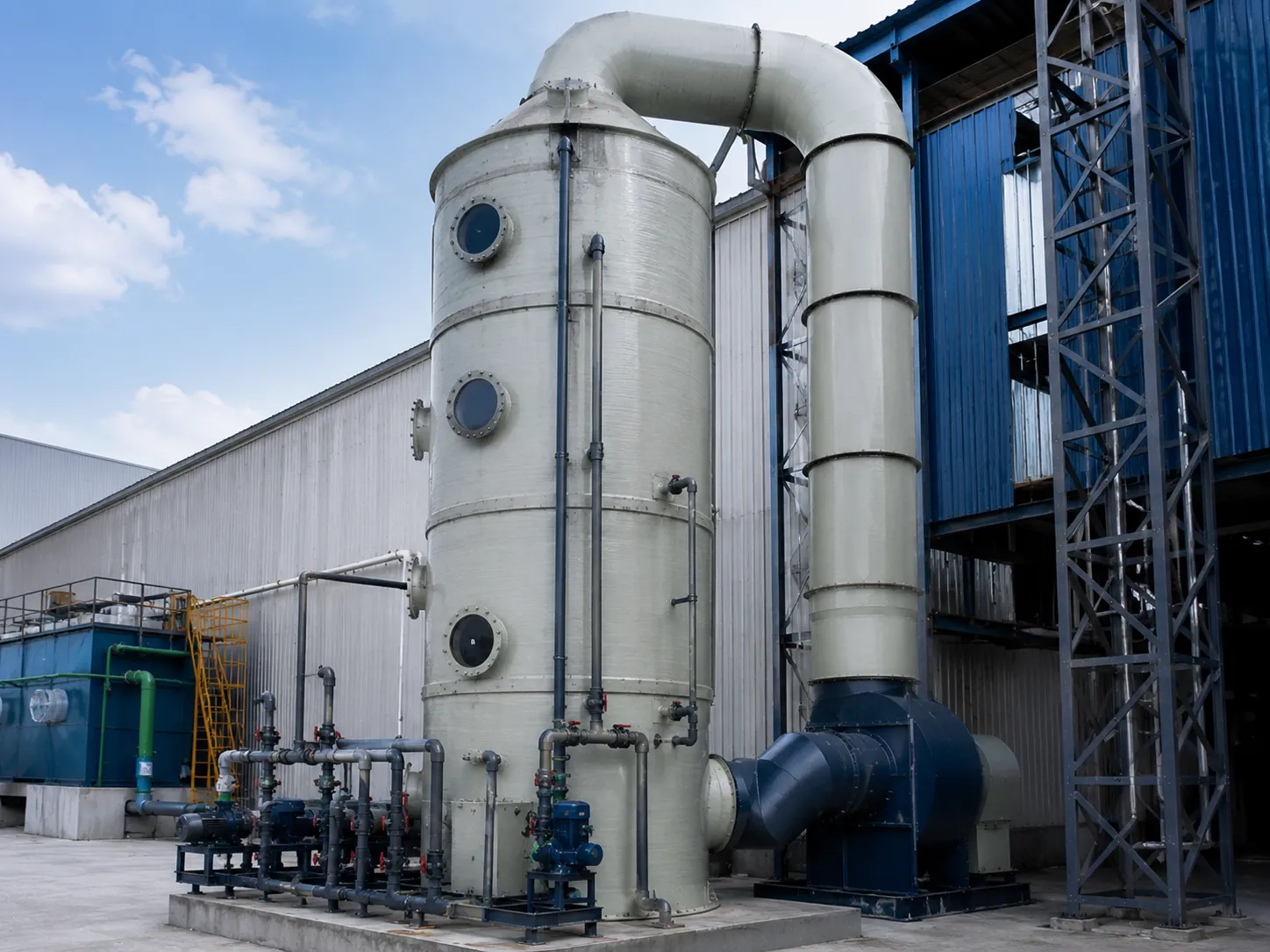
Neutralizes acidic and gaseous pollutants through liquid contact.
Suitable where dry filtration media would fail.
Venturi, packed-bed and spray-tower designs available.
FRP, PP or SS builds to match your process chemistry.
| Parameter | Range |
|---|---|
| Gas Handling Capacity | Up to 50,000 m3/hr |
| Scrubbing Efficiency | Up to 95%+ (application-dependent) |
| Scrubber Types | Venturi, packed-bed, spray-tower |
| Liquid Recirculation | Pump-fed, closed-loop options |
Ranges shown are indicative starting points, not a fixed catalog spec. Share your process data with our engineers for an exact recommendation and datasheet.
Gas composition, temperature and dust load determine the correct material. Common options for wet scrubbers include:
Final material selection is confirmed based on your specific application, not a default.
Every unit follows the same engineering discipline, from duty point through to final testing.
Gas composition, particulate load and any corrosive or acidic components are established first.
Venturi, packed-bed or spray-tower configuration is chosen based on the pollutant and required efficiency.
Scrubbing liquid flow rate is calculated to achieve your required capture efficiency.
FRP, PP, lined MS or stainless steel is chosen based on chemical compatibility.
Pump, sump and liquid distribution are sized for continuous operation.
Units are checked for structural integrity and spray/distribution function before dispatch.
Acid gas neutralization and corrosive fume control.
Solvent vapor recovery and odour control.
Fume scrubbing from metal treatment processes.
Odour control in processing and waste handling areas.
Dye and chemical fume control in wet processing.
Flue gas treatment ahead of stack discharge.
A wet scrubber uses liquid (usually water or a chemical solution) to capture particulates and gaseous pollutants, while a dry dust collector uses fabric filter media. Wet scrubbers are the better choice for hot, sticky, corrosive or gaseous emissions where dry filtration media would clog or degrade quickly.
Venturi scrubbers suit fine particulate at high efficiency. Packed-bed scrubbers are effective for gas absorption, such as acid gases. Spray-tower scrubbers handle larger droplets and lower-pressure-drop applications. The right choice depends on your specific pollutant, share your process details and we'll recommend a configuration.
Gas volume, pollutant type (particulate, acidic gas, or both), inlet concentration, gas temperature, and your required outlet emission level or removal efficiency. Water availability and disposal or recirculation constraints are also relevant.
FRP and polypropylene are common for corrosive-resistant, lightweight construction. Mild steel with rubber lining or stainless steel (316 for aggressive chemistry) are used where structural strength or higher temperature resistance is needed.
Often, yes, depending on what's being scrubbed and local discharge regulations. Recirculating scrubbers reduce water consumption but concentrate captured pollutants in the sump liquid over time, which typically needs periodic treatment or disposal. This should be planned alongside the scrubber itself.