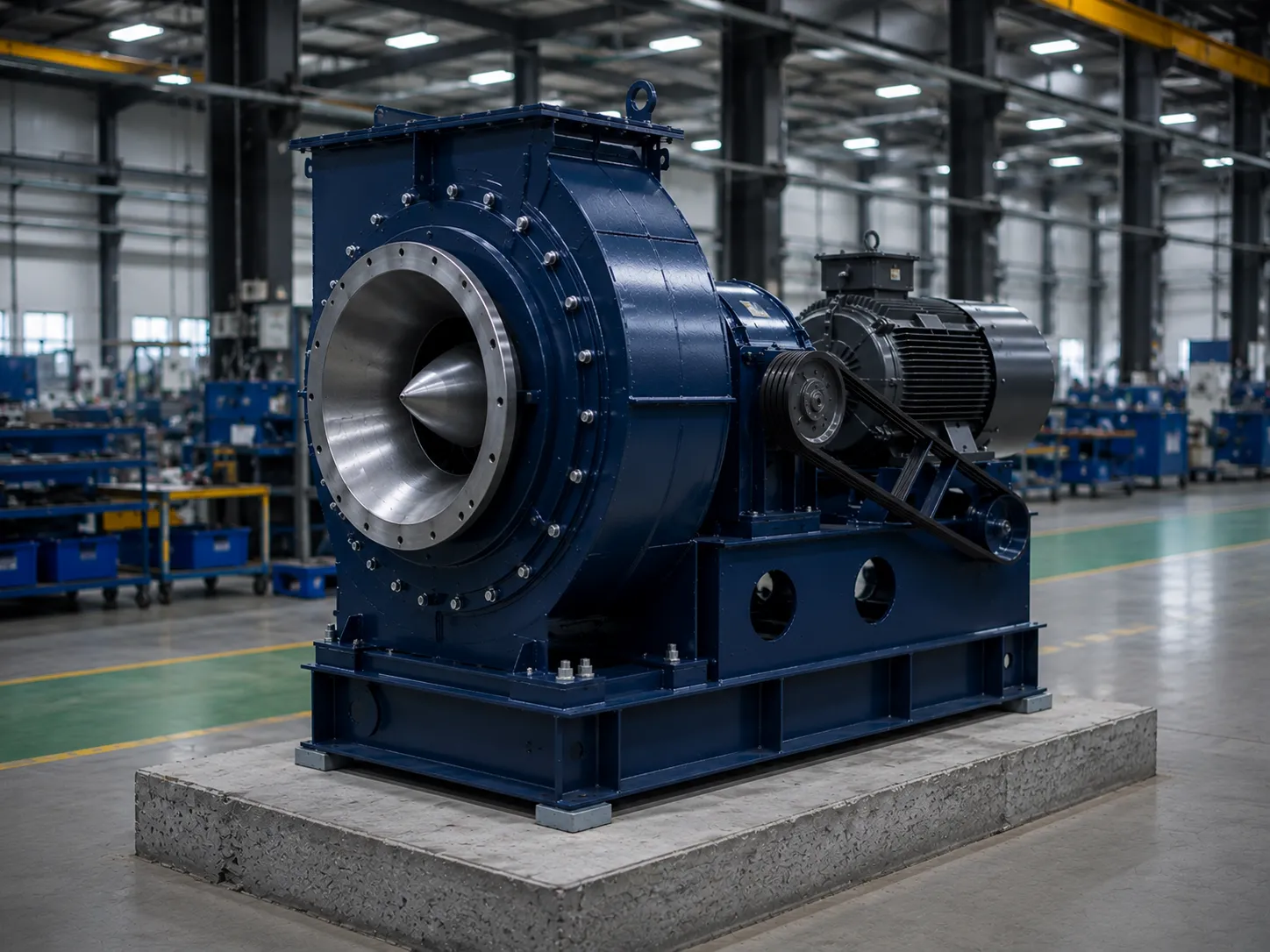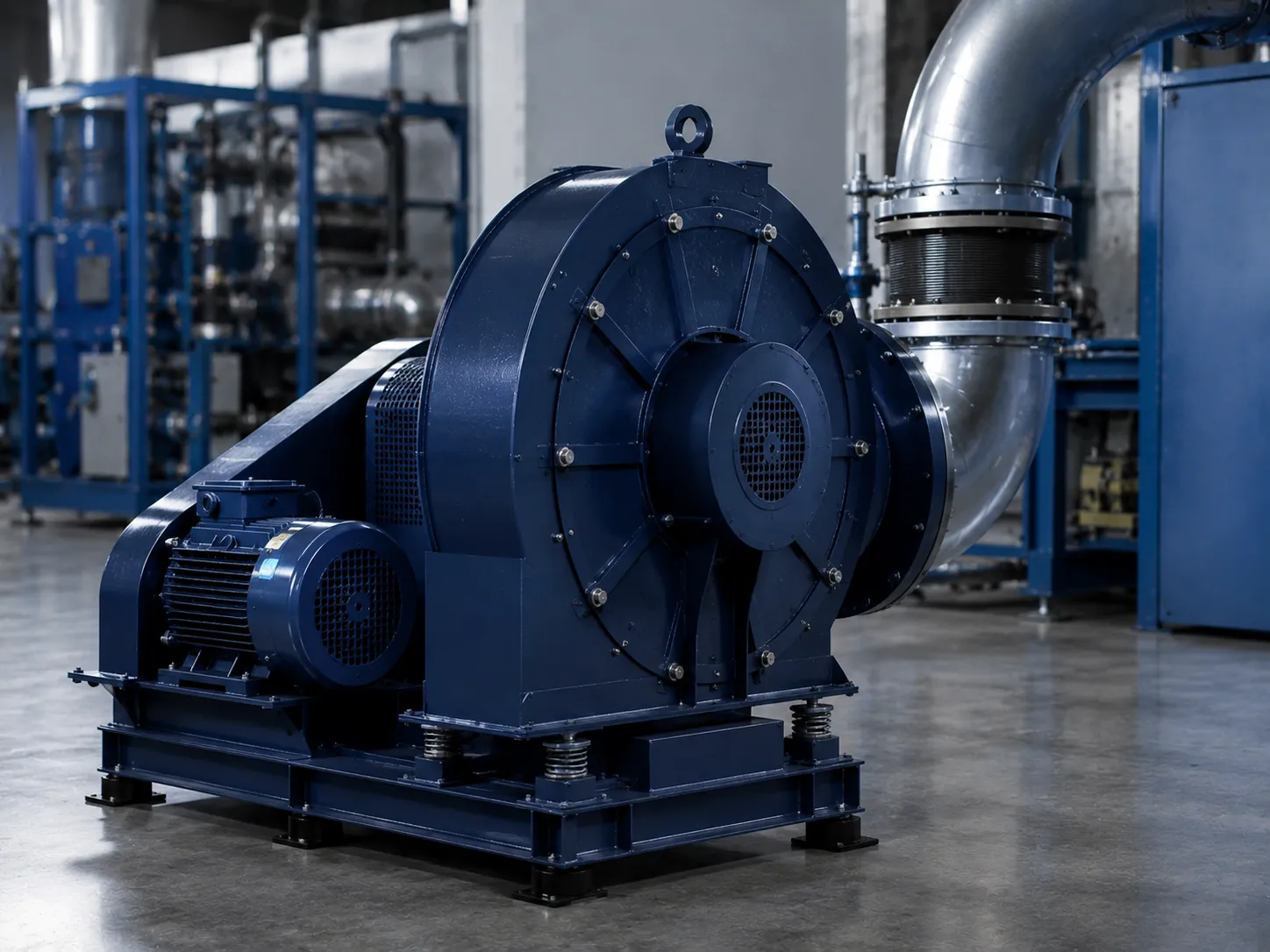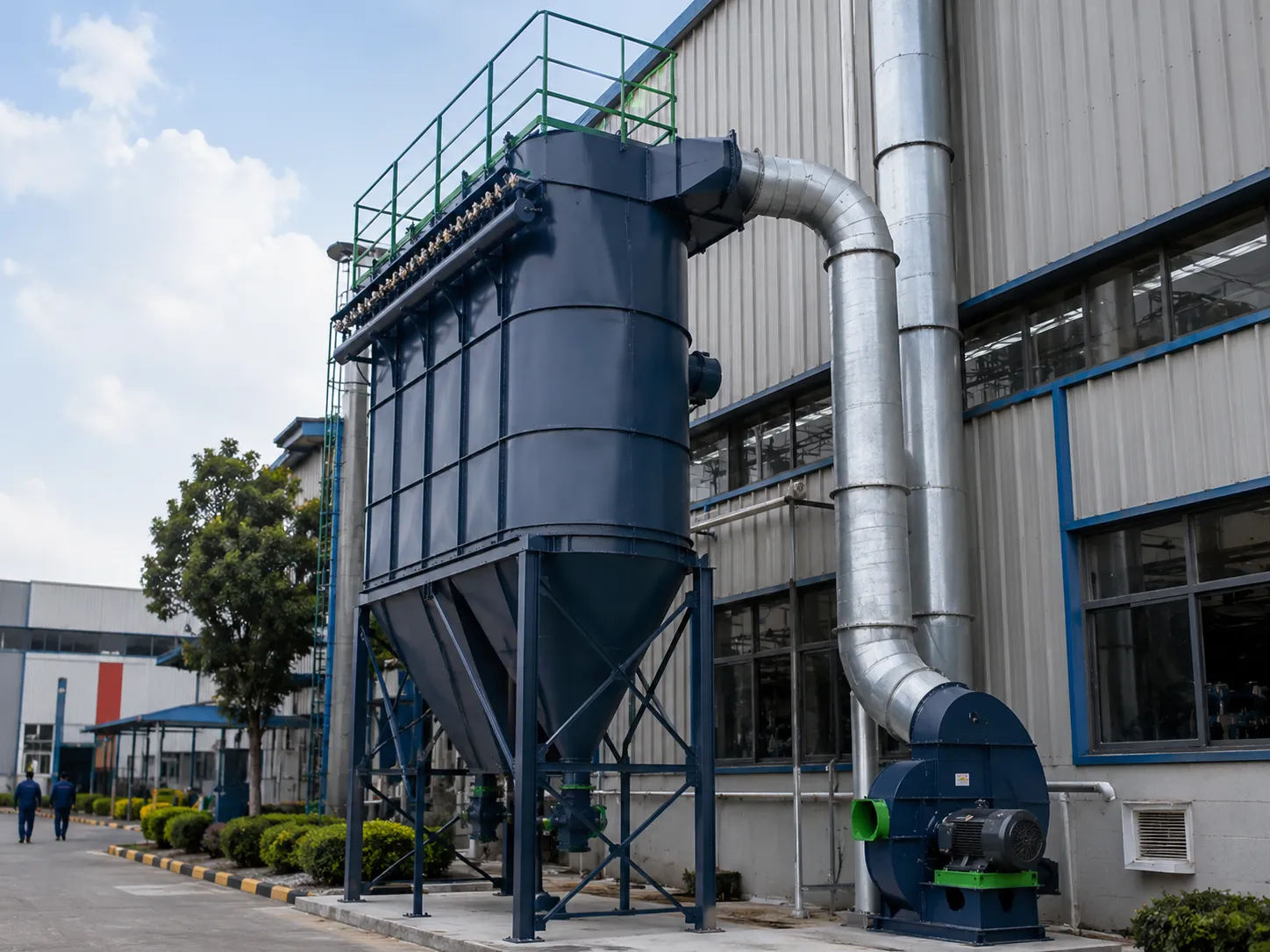
Airvent Systems manufactures high-efficiency centrifugal blowers with scroll-case design for medium to high static pressure industrial applications.
Our centrifugal blowers use a scroll-case (volute) design to convert rotational energy into steady, high-volume airflow at medium to high static pressure. Available in forward-curved, backward-curved and radial blade configurations to match your exact process requirement.
Request A Quote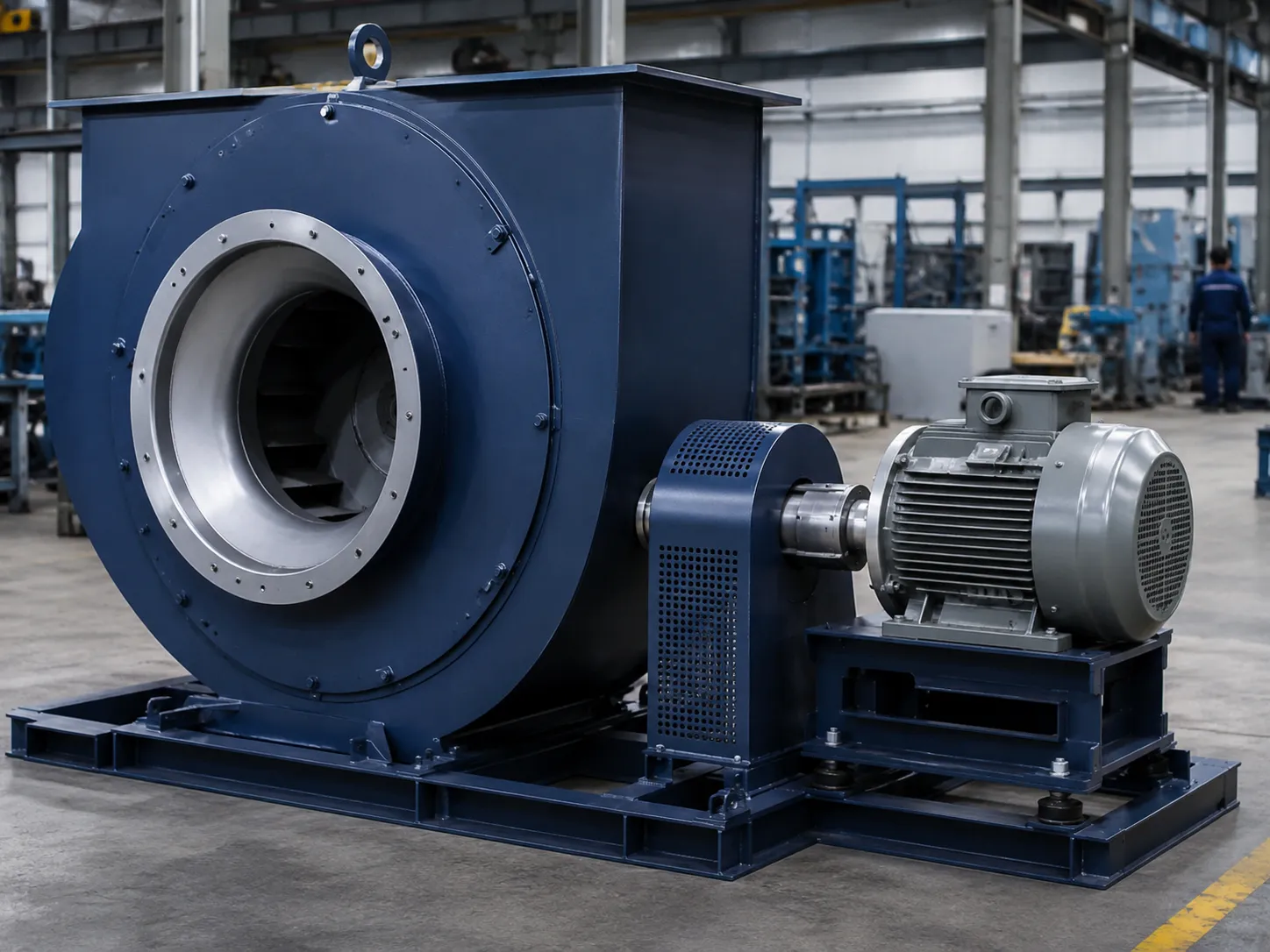
Efficient conversion of rotational energy into consistent airflow.
Forward-curved, backward-curved or radial blades on request.
Flexible drive arrangements for varied installation needs.
MS, CS or SS construction depending on the application.
| Parameter | Range |
|---|---|
| Air Volume | 100 to 1,50,000 m3/hr |
| Static Pressure | Up to 1,500 mmWC |
| Motor Power | 0.5 HP to 350 HP |
| Impeller Diameter | 200 mm to 2,000 mm |
| Fan Speed | 500 to 4,000 RPM |
| Blade Type | Backward curved, backward inclined, radial |
Ranges shown are indicative starting points, not a fixed catalog spec. Share your process data with our engineers for an exact recommendation and datasheet.
Gas composition, temperature and dust load determine the correct material. Common options for centrifugal blowers include:
Final material selection is confirmed based on your specific application, not a default.
Every unit follows the same engineering discipline, from duty point through to final testing.
Airflow, static pressure, gas temperature and altitude are established before any impeller work begins.
This determines the optimal impeller type (backward curved, backward inclined or radial) for your duty.
Blade count, angle and diameter are calculated to meet the duty point at peak efficiency.
Volute proportions are set for velocity recovery and minimum system resistance.
Belt-driven or direct-coupled configuration is selected based on your installation constraints.
Every blower is tested for airflow, pressure and power consumption before dispatch.
Backward curved designs for high-efficiency, low-noise clean air handling.
Backward inclined or radial designs for moderate to heavy particulate loads.
High-pressure radial designs for kiln draft and material handling.
Corrosion-resistant construction for aggressive gas streams.
Hygienic stainless steel construction for clean process air.
Draft applications requiring stable performance under varying load.
A centrifugal blower draws air in axially and discharges it radially through a scroll-case impeller, generating significantly higher static pressure than an axial fan of similar power. Axial fans move large air volumes against low resistance and suit general ventilation; centrifugal blowers are the right choice once static pressure needs exceed roughly 50 mmWC or the airstream carries dust or moisture.
Backward curved impellers generally deliver the best efficiency for clean air duty, since their blade profile converts velocity into pressure more effectively than radial designs. That said, a radial blade blower will outlast a backward curved one in a dust-laden application despite drawing more power, so suitability usually matters more than efficiency alone.
Airflow required, static pressure needed, gas temperature at the inlet, site altitude, the nature of the gas (clean, dusty, corrosive or humid), and your preferred drive type. Our engineers can help fill gaps in this data if it isn't fully known yet.
Yes, blade configuration is selected based on your specific duty point and the condition of the air or gas being handled, rather than being fixed to a single design across all orders.
For applications requiring hygienic or corrosion-resistant construction, we can supply blowers in stainless steel with supporting documentation. Let us know your documentation requirements (test certificates, inspection reports) at the enquiry stage so they can be planned into the order.